
The crisis in numbers
A home now costs almost three times what it did ten years ago
Wages haven’t kept up, public housing barely exists and hundreds of thousands of homes sit empty. Here are the official figures, with sources, so anyone can check them.
Eight figures that explain the crisis
+180%
rise in house prices from 2015 to 2025, the second-highest in the EU. EU average: +65%.
Eurostat, 2026
27.2%
of tenants paying market rent spend more than 40% of their income on housing. EU average: 18.6%.
Eurostat, 2025
€17.79/m²
median rent on new leases in Lisbon. Nationally, the median has passed €10/m² for the first time.
INE, Q2 2026
€920
gross minimum wage in 2026 (about €819 take-home). A 70 m² flat in Lisbon costs about €1,245 a month.
Decree-Law 139/2025
723,215
empty homes, 12.1% of all housing. More than half, about 375,000, were neither for sale nor for rent.
INE, 2021 Census
≈2%
of homes are public housing, one of the lowest shares in Europe after decades of underinvestment.
ISCTE, 2025
28.9 years
average age at which young people leave their parents’ home. EU average: 26.2.
Eurostat, 2024 data
1,447
eviction orders issued in 2025, 44% more than the year before. The figure includes cases started in earlier years.
IGFEJ, via Público
How we got here
There’s no single cause, but each one can be fixed.
Homes became investments
Golden visas and tax breaks for new residents pulled money into property. Today, buyers with a tax address abroad make up about 5% of purchases, but those from outside the EU pay twice as much on average (€470,000, against €234,000 for buyers based in Portugal). The Bank of Portugal considers foreign demand relevant to how prices move.
Short-term lets in the centres
In the old centres of Lisbon and Porto, whole buildings switched from homes to short-term lets. In Portugal, 1 percentage point more short-term lets in a municipality raised house prices by 3.7% (Franco and Santos, 2021).
Little public housing
Public housing amounts to around 120,000 homes, about 2% of the total, against an OECD average of 7%. With so little of it, people on low incomes depend entirely on the market.
Too little being built
The construction industry estimates that 45,000 new homes are needed a year. Over the last decade, about 15,000 a year were built, and around 30,000 were completed in 2025.
Wages left behind
From 2015 to 2025, house prices rose 180%. Over the same years, the minimum wage rose 72%, from €505 to €870. House prices rose two and a half times as fast as the minimum wage.
Empty homes off the market
The 2021 Census counted 723,215 empty homes. Many are run-down, but more than half were neither for sale nor for rent, almost 90,000 of them in the Lisbon metropolitan area.
Watch
Gentrification on film
The Left Hand Rotation collective was filming gentrification long before the word reached the newspapers. Based in Lisbon since 2011, it documents how tourism and speculation empty neighbourhoods, and between 2010 and 2021 it took its “Gentrificación no es un nombre de señora” workshops to 17 cities in 9 countries. Its films are free to watch.
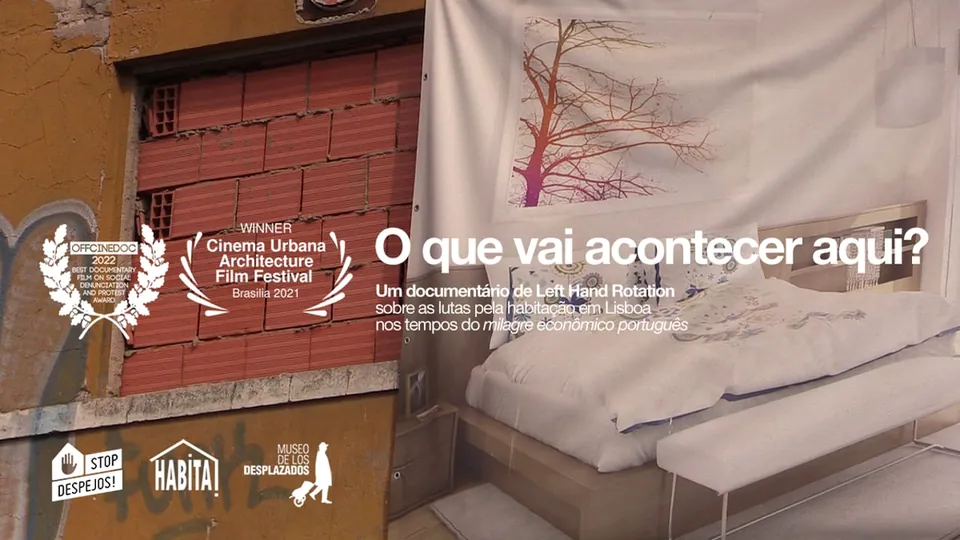
O que vai acontecer aqui?
The movements defending the right to live in Lisbon, told by the people resisting evictions. Made with Habita! and Stop Despejos.
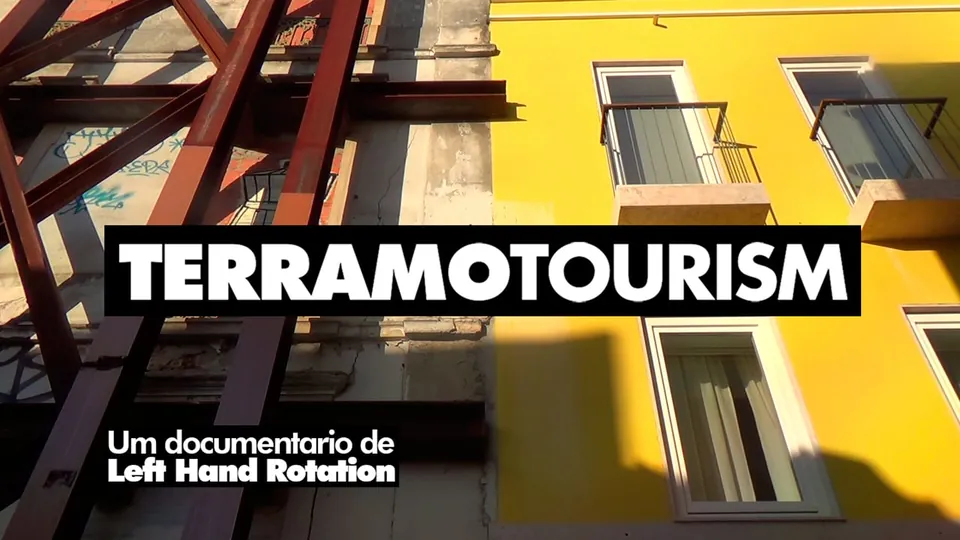
Terramotourism
In 1755, an earthquake destroyed Lisbon. Today the city shakes with a tourist earthquake that pushes the people who live there out of the centre.

Alfama é Marcha
Alfama gets ready for its marcha, the neighbourhood’s parade in Lisbon’s June festivities, and a question remains: how do you stop neighbourhood life from becoming folklore for tourists?
Janela
Lisbon seen from a window: outside, the city is hastily renovated for the arrival of visitors.
Bonfim. Ilhas do tesouro
In a workshop with local collectives, participants mapped the housing conflicts in Bonfim and put up posters around the neighbourhood.

Bye and thanks for nothing
An action in the port of Ponta Delgada against the mass arrival of cruise ships in São Miguel, with the Habitat Açores collective.

Ficción inmobiliaria
Clips from fiction films in which property speculation and gentrification are part of the story. There is also a second part (opens in a new tab).

O nosso último filme sobre Lisboa
From Expo 98 to the latest protests, including the demolition of Bairro da Jamaica in Seixal. Premiered at DocLisboa on 22 October 2026, it will be free to watch on the collective’s website.
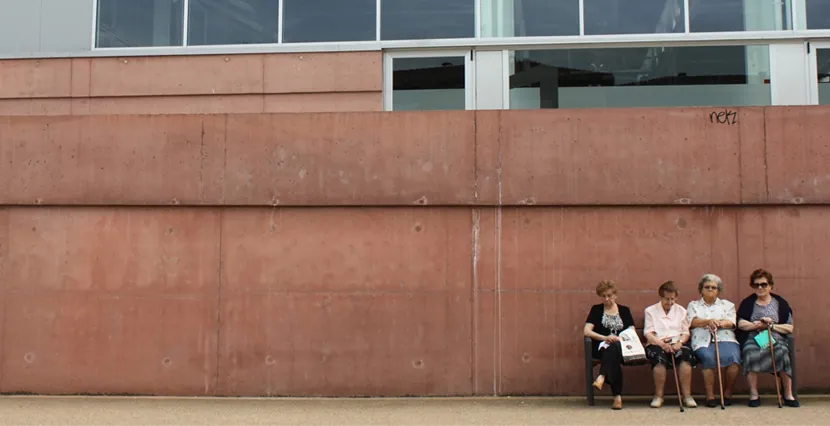
Museo de los Desplazados
An open, collaborative archive about gentrification and the people it pushes out, built from the collective’s workshops.
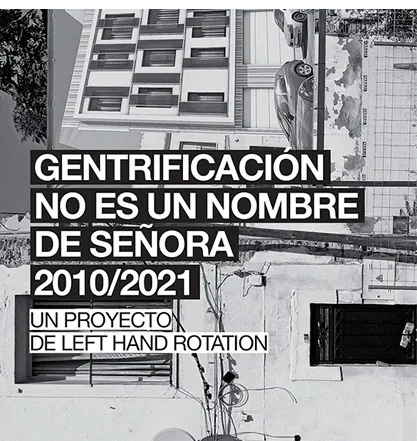
Gentrificación no es un nombre de señora
Workshops on gentrification and the role culture plays in it, in 17 cities in 9 countries, Lisbon and Porto among them.
The videos are hosted on Vimeo and only load when you press “Watch the film”. From then on, Vimeo may store cookies in your browser.
Solidarity
Causes we support
Standing up for your home also means standing up for the place where you live. These are causes Cultura no Muro supports, and we invite you to get to know them.
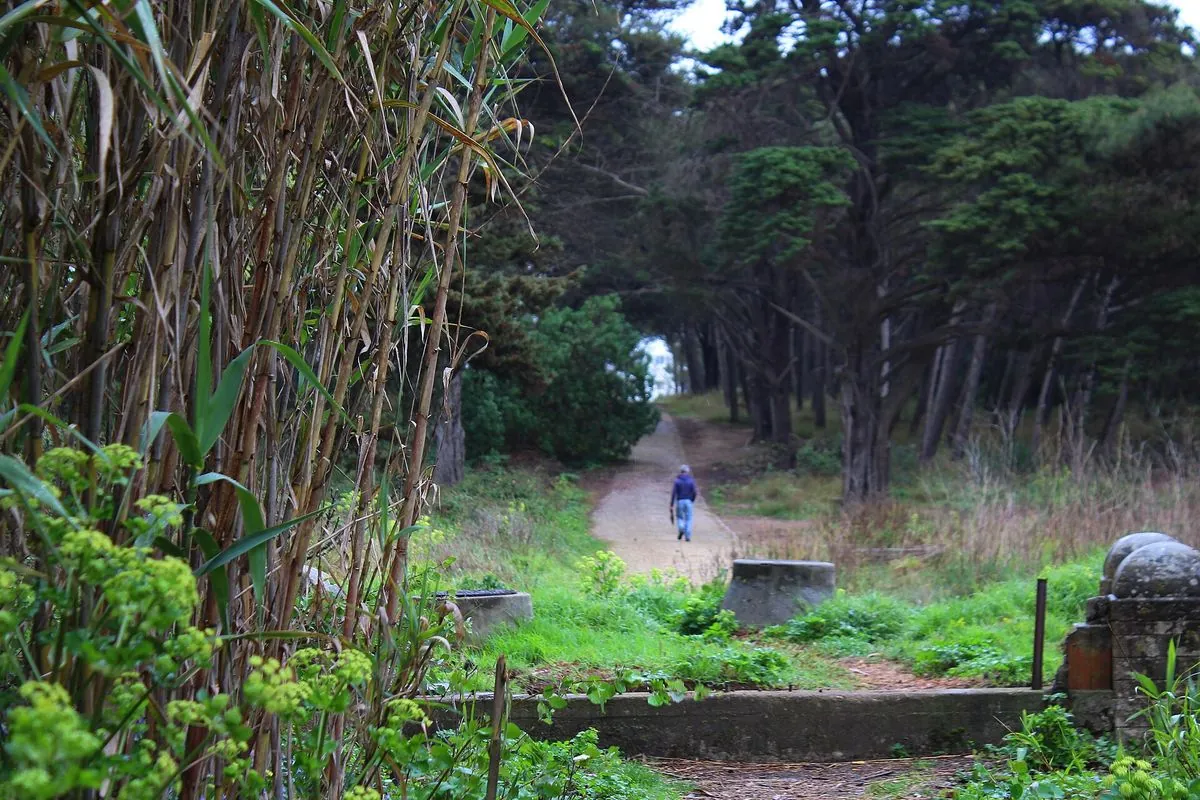

Quinta dos Ingleses: luxury flats where homes are missing
In Carcavelos, facing the beach, the Quinta dos Ingleses has about 52 hectares of green space, 35 of them pine forest. Its name comes from the English staff of the submarine telegraph cable that landed there in 1870. The people defending it call it “the last green lung of the Linha”, the stretch of coast between Lisbon and Cascais.
The plan approved by Cascais council allows around 850 flats there, in buildings of up to seven storeys, plus hotels and shops. The land belongs to the construction company Alves Ribeiro. They are not homes for the people who work here: the press describes them as luxury flats.
In April 2024, about 40 people were living on the estate in tents and campervans because they could not afford rent. They had to leave so the works could begin, and the mayor refused them social housing.
SOS Quinta dos Ingleses is a non-partisan civic movement, an association since 2021 and an environmental NGO since 2024. It defends the pine forest, the beach and the memory of the place, and in October 2023 it took the council to court, arguing that the project breaks the rules that protect the coastline.
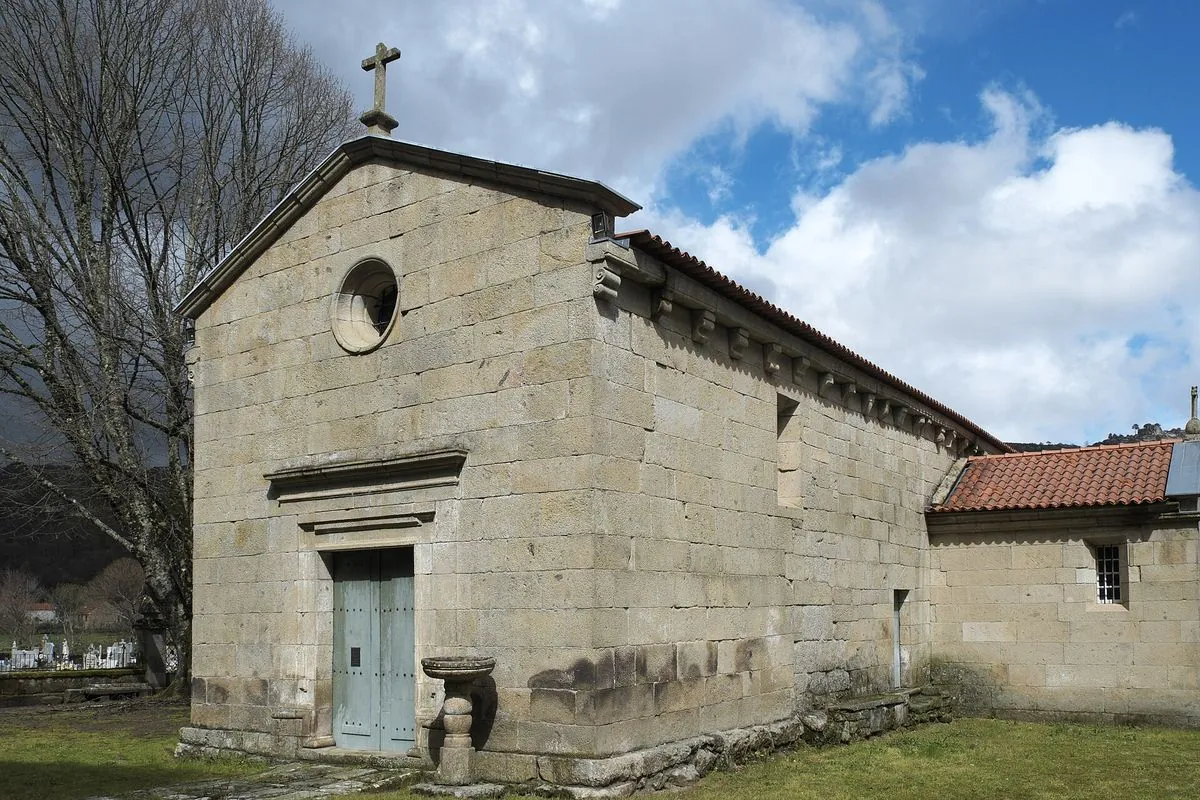
Covas do Barroso: the village that doesn’t want a mine
In Covas do Barroso, in the municipality of Boticas, the British company Savannah Resources wants to open four open-pit lithium mines, around 100 metres deep, plus waste dumps and industrial facilities.
Barroso is Portugal’s only FAO Globally Important Agricultural Heritage System (GIAHS), recognised in 2018 for farming and herding that have shaped the landscape for centuries, with common land, the baldios, managed together by the neighbours.
The association Unidos em Defesa de Covas do Barroso and the commoners of the baldios defend the land, the water and the village’s way of life. The government authorised the company to occupy private and common land without the owners’ consent, and the courts have suspended the works more than once, most recently in June 2026.
No one should lose their land or their home without their consent, fair compensation and a serious assessment of the impacts.
Make your voice heard
Urban plans, large developments, mines and other projects that change the land go to public consultation before they move ahead. On the Participa portal you can see the consultations that are open and have your say. The more people take part, the harder it is to ignore them.
Timeline
What changed in the law
2006
New Urban Lease Regime (NRAU)
Law 6/2006 sets today’s rules on lease length, rent increases and how leases end.
2009
Tax breaks for new residents
The non-habitual resident regime (Decree-Law 249/2009) offers ten years of low taxes to people moving to Portugal. It adds pressure on prices in the big cities and closes to newcomers in 2024.
2012
Golden visas
Law 29/2012 grants residence to anyone buying property worth €500,000 or more. Until 2023, most golden visas were granted for buying homes.
2012
The “rent law”
Law 31/2012 makes it easier to raise old rents and to evict, and creates a fast-track eviction procedure. It is the law the tent camps want repealed.
2014
Short-term lets
Decree-Law 128/2014 creates the legal framework for renting homes to tourists. Whole buildings in Lisbon and Porto are taken off the housing market.
2019
Property investment companies
Decree-Law 19/2019 creates SIGIs, listed companies that buy property to rent out, with the same tax treatment as investment funds.
2019
Tenant protection and the Housing Framework Law
Laws 12/2019 and 13/2019 ban harassment of tenants and make leases more stable. Law 83/2019 recognises housing as a fundamental right. Much of what it provides for has yet to be put into practice.
2023
The “Mais Habitação” package
Law 56/2023 caps rent rises at 2% on new leases for homes that were already rented, ends golden visas for buying property and tightens the rules on short-term lets and empty homes.
2024
New land law
Decree-Law 117/2024 lets rural land be reclassified as urban to build housing, under the government’s “Construir Portugal” programme.
2026
Faster evictions: not law yet
Government bill 103/XVII would scrap the 2% cap on new leases and speed up evictions for arrears. It passed its first reading on 30 September, with PSD, IL and CDS in favour and Chega abstaining, and is now being debated in committee. There is still time to stop it.
Sources
Figures last checked in October 2026. The scientific studies behind each proposal are listed on the Our demands page. If you spot a mistake or have more recent figures, let us know.
- INE, Statistics Portugal: Housing Price Index, rents on new leases, 2021 Census
- Eurostat: house price index, age of leaving the parental home
- PORDATA: historical series on housing, wages and population
- OECD Affordable Housing Database: social housing and housing costs across OECD countries
- AICCOPN: estimates of how many new homes are needed
- Constitution of the Portuguese Republic, Article 65
- Law 83/2019, Housing Framework Law
- Portal da Habitação (IHRU): public programmes and the National Housing Programme
Housing is a right.
Let’s make sure it’s honoured.
Join the people getting organised in buildings, neighbourhoods and workplaces all over Portugal.